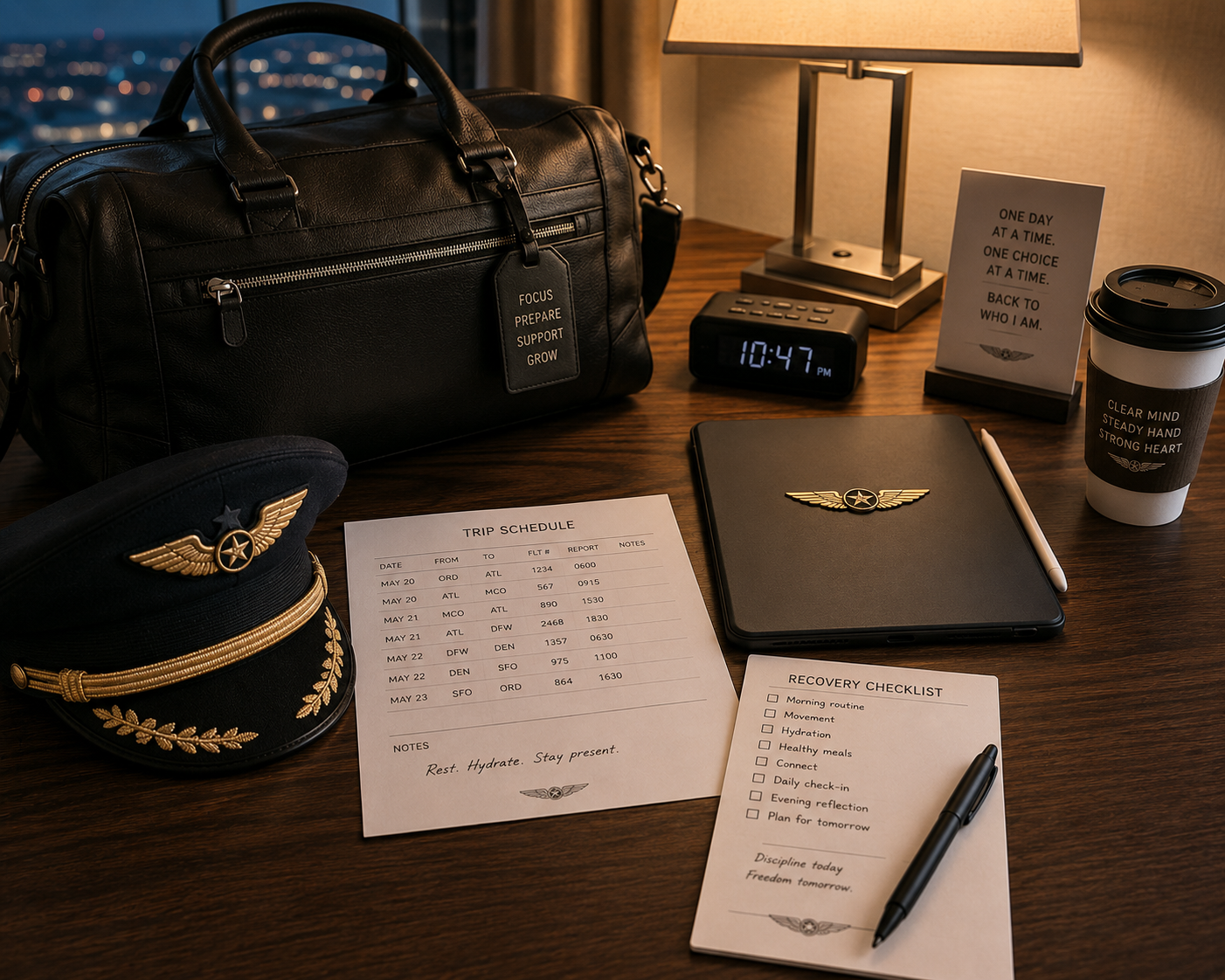
Aviation rewards preparation, consistency, and respect for risk. Compulsive pornography use and compulsive sexual behaviors often survive by operating in the opposite way: secrecy, improvisation, and the belief that you can manage the next urge when it arrives.
If the pattern follows you into hotels, overnights, schedule changes, or long periods away from home, a recovery plan needs to travel with you. It cannot depend on a perfect routine or constant proximity to your family.
Being a pilot does not cause compulsive sexual behavior or pornography use. Certain parts of the work may create predictable moments when an established pattern becomes easier to repeat:
These are not excuses. They are conditions to plan for. When you understand where the pattern gains strength, you can stop relying on willpower in the moment.
Aviation professionals may worry about reputation, employment, medical certification, or required disclosures. Those concerns deserve accurate guidance.
Do not make career decisions based on assumptions from an article, online forum, or another person’s experience. Rules can vary by role, employer, jurisdiction, military status, medical circumstances, and the type of help being considered. When a question may affect your certification or employment, consult an appropriately qualified source who can address your specific situation.
Recovery support should never make promises about secrecy or professional consequences that it cannot guarantee.
A strong plan reduces the number of decisions you must make when you are tired, alone, or emotionally overloaded.
Before each trip, identify:
The purpose is not to make travel risk-free. It is to give you a practiced response before the difficult moment arrives.
You may be highly disciplined at work and still feel unable to change this part of your life. That does not mean your professional discipline is fake. It means the behavior may be serving an emotional or habitual purpose that job competence alone does not address.
Learning your porn addiction triggers can help you distinguish sexual desire from fatigue, stress, loneliness, resentment, or the wish to escape.
Software, device boundaries, and check-ins can add useful friction. A trusted accountability partner can also notice patterns you minimize when you are alone.
None of those tools can do the recovery work for you. You still need to practice honesty, respond to stress differently, repair relationship harm, and maintain the plan when no one is watching.
Coaching may help with recovery planning, accountability, habits, and practical implementation. Therapy or medical care may be appropriate when clinical assessment, trauma treatment, mental health symptoms, medication, or another health concern is involved.
If you need advice about certification, disclosure, or employment rules, seek qualified professional guidance for those questions. Do not ask a recovery coach to provide legal, regulatory, or aeromedical conclusions.
If your current approach disappears as soon as your schedule changes, structured support may help you build something more durable. You can schedule a Confidential Recovery Session to discuss coaching and practical next steps with WSU.


© 2026 Sex & Porn Addiction Recovery Program - wellnessseekersultd.com. All Rights Reserved.