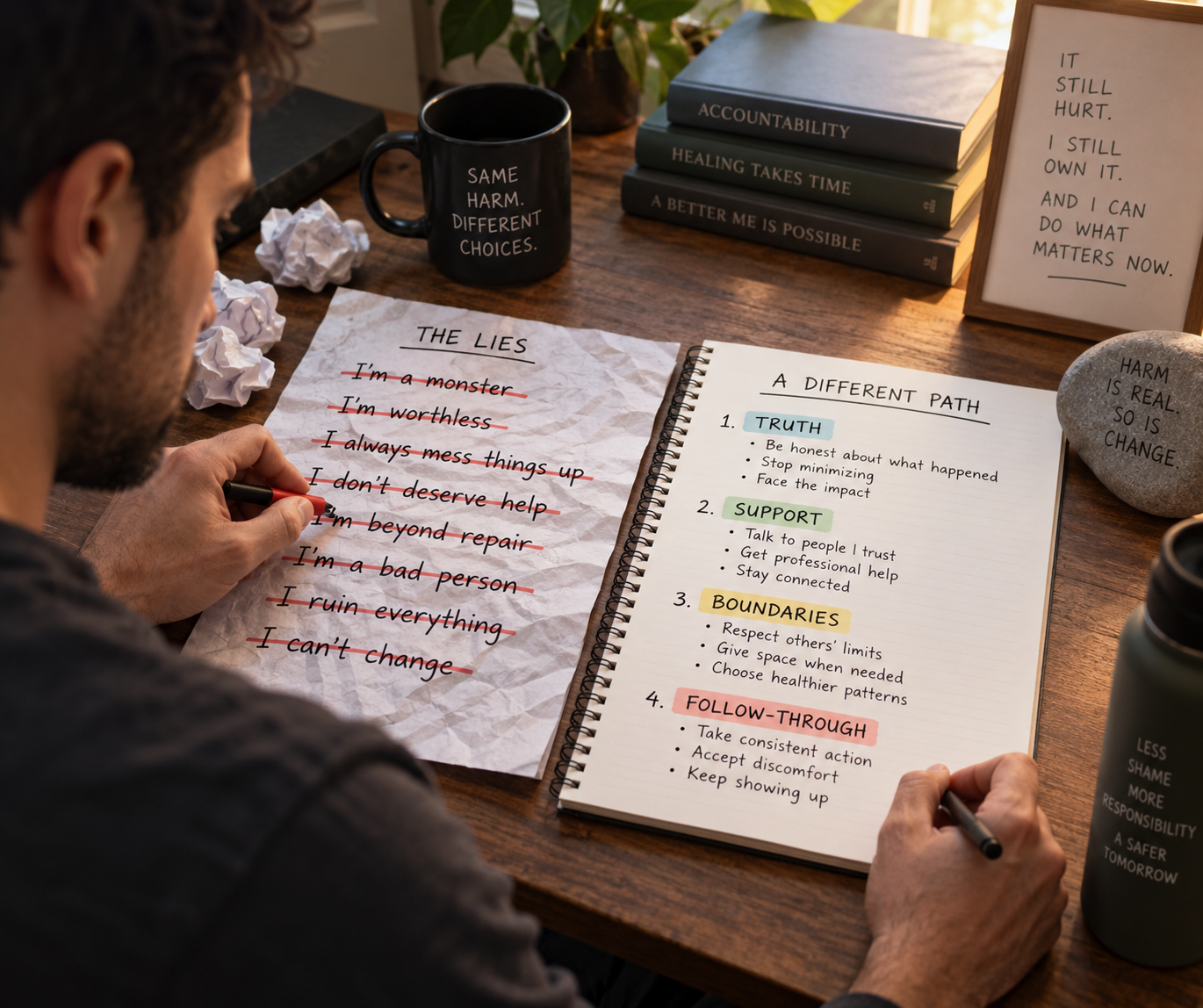
After your wife discovers an affair, sexual messages, webcams, paid sexual contact, secret accounts, or another betrayal, you may feel sick over what you did. Then the shame tells you to hide, shut down, defend yourself, or make desperate promises.
That is the shame spiral after cheating. Breaking it does not mean minimizing the harm. It means refusing to let self-condemnation become one more reason to avoid the truth.
Guilt says, “I did something that violated my values and hurt another person.” Useful guilt can lead to honesty, repair, boundaries, and a better recovery plan.
Shame says, “This proves I am hopeless.” Once you turn the behavior into your entire identity, hiding can feel easier than remaining present for the consequences.
The promise may be sincere. The problem is that shame does not automatically build honesty, emotional skills, accountability, or a plan for the next vulnerable moment.
Statements such as “I am a monster,” “You should leave me,” or “My life is over” may sound like accountability. Often they move the focus from her pain to your need for reassurance.
Your feelings matter, but they need appropriate support. Take panic, hopelessness, and the urge to collapse to a coach, therapist, support group, sponsor, or trusted accountability person. Do not require the person you hurt to convince you that you are still worth helping.
Replace “I am a failure” with a factual statement: “I restarted a sexual conversation, hid it, and broke our agreement.” Accuracy keeps the behavior serious and gives you something specific to change.
Shame tells you that concealment will prevent more pain. In practice, another discovery usually proves that secrecy is still in charge. Follow the disclosure process you have established and get clinical guidance when the history is complex.
End outside contact. Answer questions honestly. Respect boundaries. Address health or financial risks. Arrange support. Accept that trust depends on evidence over time and that reconciliation remains your wife’s choice.
Ask what happened before the behavior, what story you told yourself, what feeling you avoided, and where your recovery plan disappeared. Understanding the pattern is not an excuse. It helps you change the next decision earlier.
Recovery includes tolerating discomfort without escaping into sexual behavior, defensiveness, or self-pity. You can hear that your wife is hurt without correcting her timeline or demanding recognition for your effort.
If shame is connected to depression, trauma, obsessive moral fear, severe anxiety, self-harm thoughts, or danger to yourself or others, seek licensed mental health care. If you may act on thoughts of suicide or self-harm, contact emergency services or a crisis resource now.
Coaching can support routines, accountability, boundaries, and daily follow-through. It does not replace diagnosis or mental health treatment.
No. You can acknowledge the harm, accept consequences, and act responsibly without treating yourself as beyond repair. Responsibility is visible in what you do next.
She may have her own shock and pain and should not be required to manage your shame. Ask someone on your recovery team for support while respecting her boundaries.
Treat that urge as a warning sign. Contact support before acting on it, follow the agreed disclosure process, and do not delete or alter information to control what your wife can learn.
You do not need to pretend the betrayal was small. You need to stop using how terrible you feel as proof that change is happening.
If shame keeps sending you back into secrecy, schedule a Confidential Recovery Session with WSU. We help men turn remorse into practical recovery work through honesty, accountability, and consistent action.


© 2026 Sex & Porn Addiction Recovery Program - wellnessseekersultd.com. All Rights Reserved.