A sex addiction assessment is a professional evaluation of sexual behavior, control, consequences, and relevant health history. It is more than an online quiz. A qualified licensed clinician can assess whether a recognized condition is present and what care fits. A recovery-coaching consultation serves a different purpose and does not provide a diagnosis.
You can seek an assessment before you know what to call the problem. Perhaps you keep returning to secret accounts, paid sexual interactions, pornography, or affairs after promising yourself you would stop. Or you are unsure whether the main issue is compulsivity, broken agreements, distress about your values, or something else.
“Sex addiction” is common search language. Clinicians may assess for compulsive sexual behavior disorder, or CSBD, alongside other explanations. Clinical guidelines on CSBD caution against relying on screening instruments alone; diagnostic assessment requires a fuller evaluation.
An assessment can help distinguish the questions you need answered. Are you losing control of behavior? What harm is occurring? Are other health concerns contributing? What kind of support is appropriate? It cannot determine whether your partner should trust you, stay, or reconcile.
For an overview of the choices beyond the evaluation itself, see our guide to compulsive sexual behavior recovery and support. This article focuses on preparing for the clinical conversation.
Mayo Clinic describes an evaluation that considers sexual thoughts and behaviors, their effects on daily life and relationships, mental and physical health, and alcohol or drug use. The exact process varies by clinician and setting.
Expect to discuss the pattern honestly, including behavior that feels embarrassing or does not fit the explanation you hoped for. A useful account describes what happens, how often, your attempts to stop, and the consequences. You do not need graphic detail in an appointment request; ask the clinician what information is needed during the assessment.
Questionnaires may be part of the process. Ask what a score can and cannot tell you. Neither a high score nor a reassuring result should replace discussion of the actual behavior and its impact.
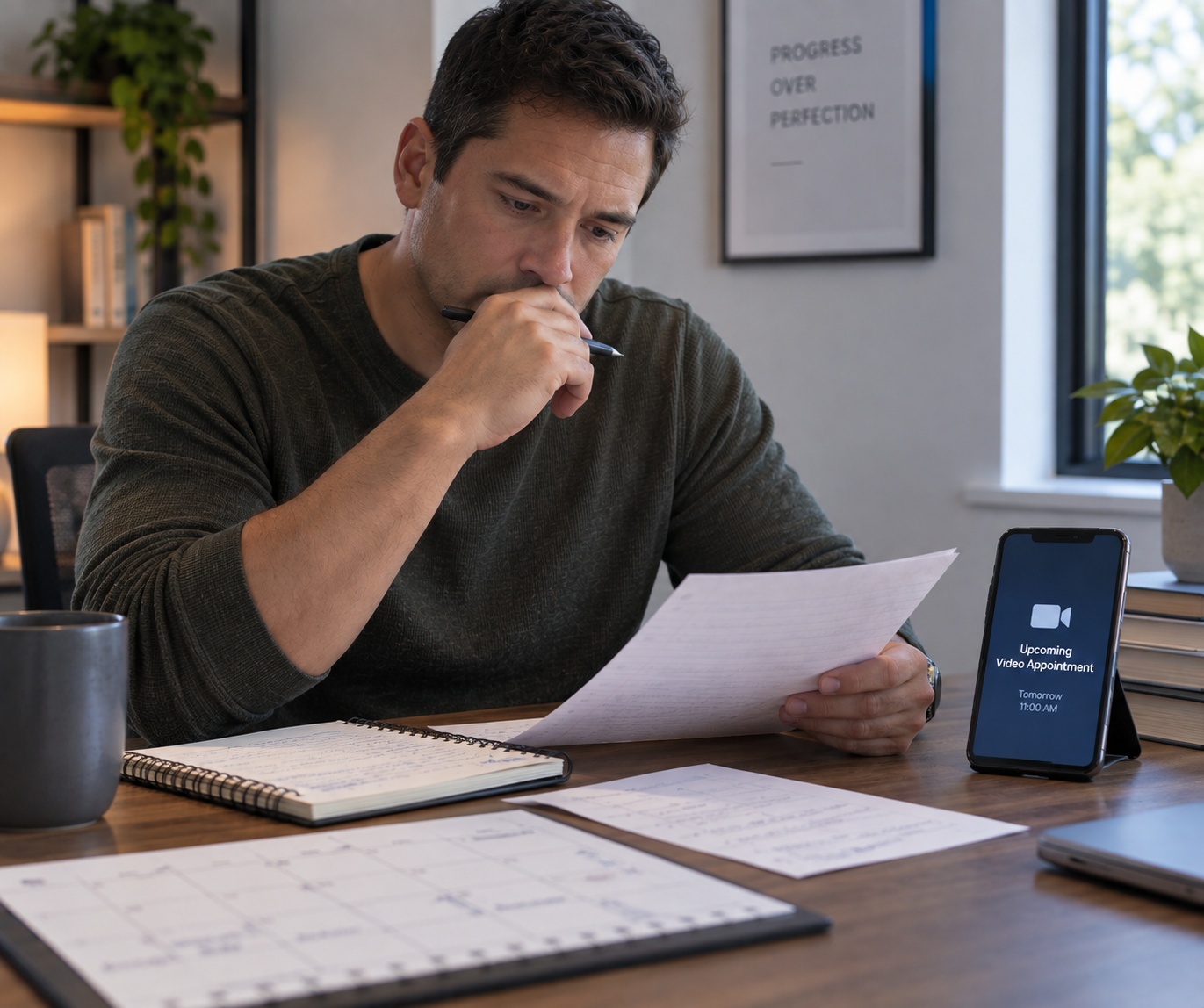
Bring notes so that shame, anxiety, or the wish to appear better does not decide what gets discussed.
You do not need a polished autobiography or certainty about every date. “I do not remember exactly” is more useful than an invented answer. If your first account left something out, bring it back into the conversation.
Do not ask your partner to assemble the record for you. They may choose to provide their perspective if the clinician proposes it and appropriate consent arrangements are in place. They can also decline.
Ask about licensure, experience assessing compulsive sexual behavior, and the setting in which the clinician practices. A title that sounds specialized is not a substitute for understanding the person’s qualifications and scope.
Ask about appointment length, questionnaires, and whether you will receive an explanation of findings and recommendations. Do not assume one appointment will settle every question.
Ask how records are handled, what the limits of confidentiality are, and how any partner involvement would work. Do not assume that bringing a partner or paying for an appointment gives someone unrestricted access to another person’s records.
Ask the clinician to explain the findings in ordinary language: what they concluded, what remains uncertain, and why the recommended next step fits. That might include further evaluation or clinical care. It may also include practical support alongside care.
A diagnosis is not permission to continue harmful behavior. No diagnosis is not proof that the conduct was harmless. In either case, broken agreements and the need for honest action still deserve attention.
If coaching is part of your plan, understand the difference between a coach and a therapist before choosing. Therapy and clinical assessment sit outside WSU’s coaching scope. Our article on how online recovery coaching works explains the practical support you might discuss separately.
If you are looking for that practical support, schedule a Confidential Recovery Session. It is a chance to explore fit, not a sex addiction assessment. For diagnostic questions, start with a qualified licensed clinician.


© 2026 Sex & Porn Addiction Recovery Program - wellnessseekersultd.com. All Rights Reserved.