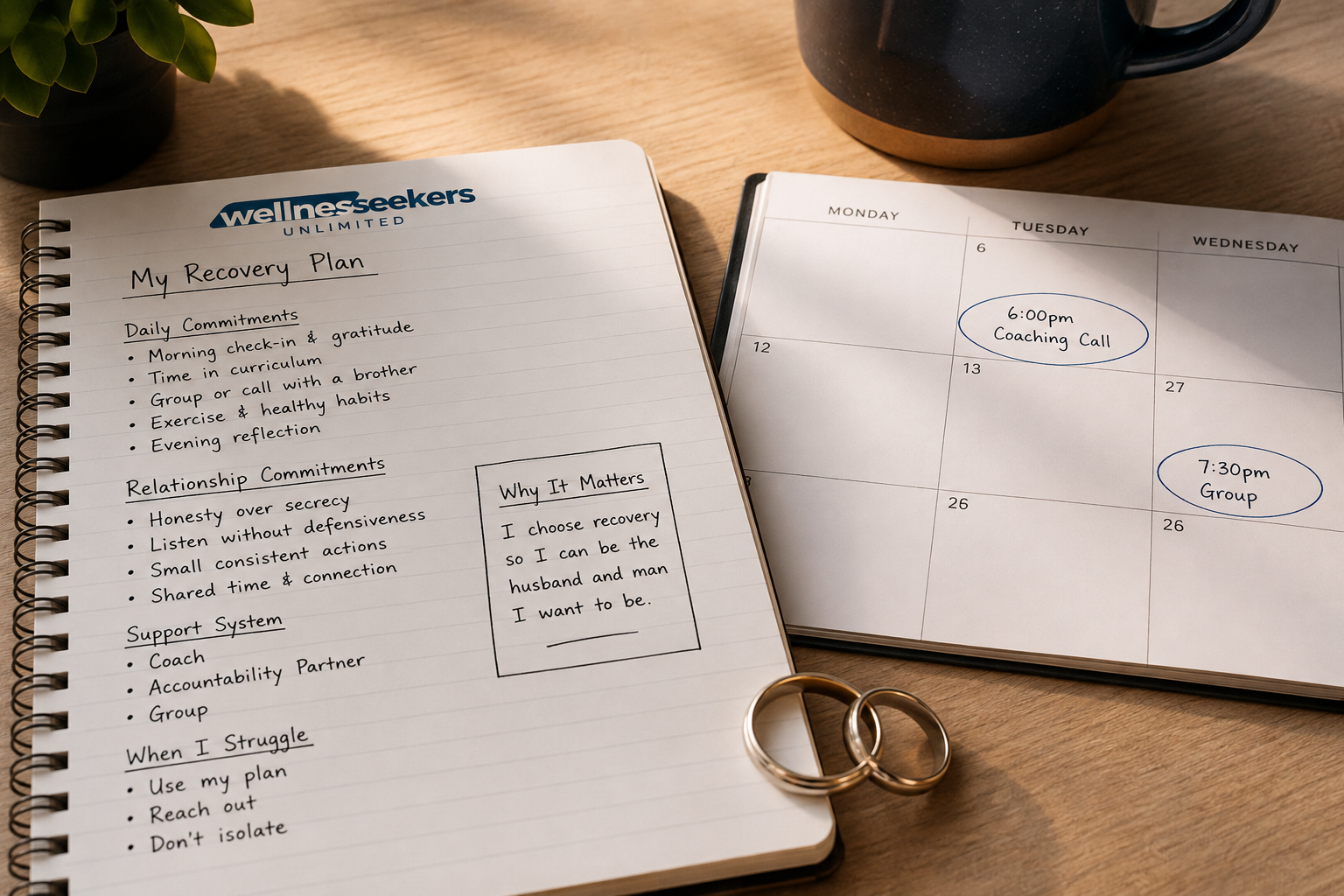
Porn addiction recovery for married men requires two commitments at once: changing the compulsive behavior and responding responsibly to the harm within the marriage. Your partner cannot do your recovery for you, and recovery does not guarantee a particular relationship outcome. It can, however, help you become more honest, consistent, and capable of repair.
If your focus is only “How do I keep my marriage?” fear may drive short bursts of effort. A stronger foundation is: “How do I live truthfully and do the work, regardless of how quickly trust returns?”
Marriage makes the consequences relational. Secrecy, broken agreements, emotional distance, sexual expectations, financial behavior, or repeated discoveries may have affected your partner’s sense of safety and their ability to trust what you say.
That means sobriety matters, but it is not the only evidence of recovery. Your response to questions, boundaries, disappointment, and accountability also reveals whether change is becoming real.
Ownership sounds like clear truth without excuses, blame, or pressure for forgiveness. It also means allowing your partner to have their own response.
Your spouse may need their own support. Their healing process is related to yours, but it is not controlled by your timeline.
Your partner should not be your only accountability partner. Choose a coach, therapist, group, sponsor, or trusted peer who can hear the full truth and expect action from you.
A practical system should include defined sobriety, daily routines, device boundaries, trigger awareness, regular check-ins, and a written relapse prevention plan. It should still function when the marriage is tense and your partner is not available to encourage you.
Conflict, loneliness, rejection, and uncertainty can increase risk. They do not cause your choices, but they need to be planned for.
A plan protects both recovery and honesty. It helps prevent one difficult conversation from becoming an excuse for secrecy.
Trust usually returns through observable patterns, not persuasive words.
Follow the recovery plan on ordinary days, not only after a crisis. Keep appointments, complete check-ins, and maintain boundaries when no one is watching.
Provide the transparency you have agreed to without acting as though reasonable questions are punishment. Transparency should support repair, not become a permanent substitute for your own integrity.
Your partner may not feel safe because you have had a good week or month. Avoid setting deadlines for their trust. Focus on being trustworthy today.
Couples work, individual therapy, coaching, and partner support serve different needs. Therapy may be especially important when there is trauma, significant mental health distress, or complex relationship harm. Coaching can support your recovery structure and follow-through.
You can influence the marriage through honesty, empathy, boundaries, and consistent recovery. You cannot require your partner to stay, forgive, trust, or reconnect on your schedule.
This is painful, but it is also clarifying. Your job is to become responsible for your behavior and participate in repair without turning recovery into a negotiation.
Look for coaching that understands both personal recovery and relationship impact. The program should help you build accountability outside the marriage, prepare for difficult conversations, respect your spouse’s boundaries, and refer to licensed care when therapy is needed.
Be cautious of promises to save a marriage. A trustworthy program can support your actions, but it cannot guarantee another person’s decision.
You do not rebuild a marriage with one perfect conversation. You build a new pattern through many honest decisions, especially when the response you receive is not the one you hoped for.
If you want help building a recovery plan that accounts for marriage, accountability, and long-term change, schedule a Confidential Recovery Session with WSU.


© 2026 Sex & Porn Addiction Recovery Program - wellnessseekersultd.com. All Rights Reserved.