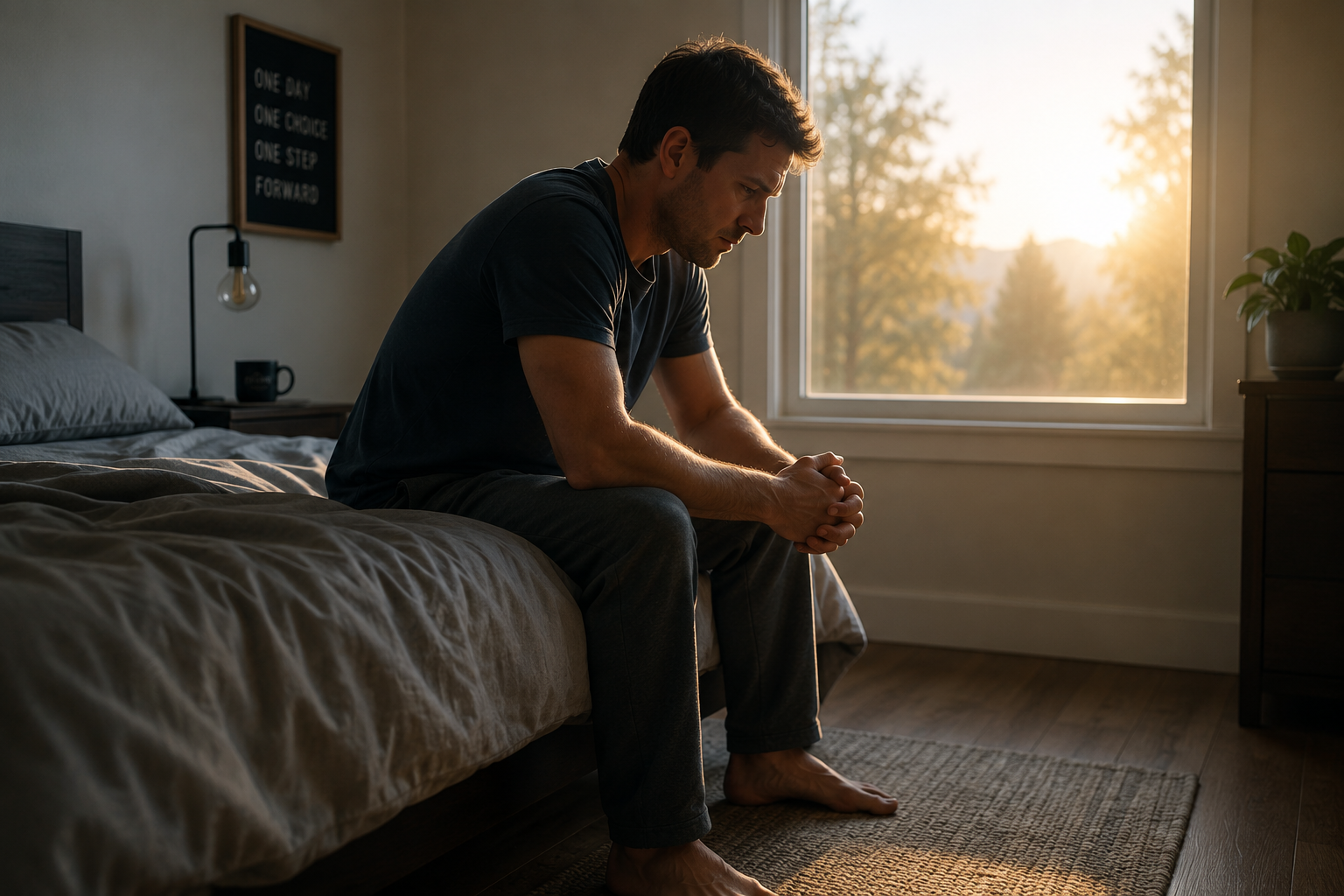
Deciding to quit pornography is often the first step toward getting your life back. For many men, though, that decision comes with an unexpected challenge.
Instead of feeling better immediately, they feel worse.
Maybe your urges seem stronger than ever. Your mood swings are all over the place. You can’t focus, you’re irritable, and part of you starts wondering if quitting was even the right decision.
If that’s where you are, you’re not alone.
Porn addiction withdrawal is a real experience for many people. While it doesn’t look exactly like withdrawal from drugs or alcohol, the brain still has to adjust after losing something it relied on for stimulation, escape, or emotional relief.
The good news is that these symptoms don’t last forever. Understanding what’s happening can help you stay committed when recovery feels difficult.
Research on compulsive pornography use is still growing, but recovery coaches and clinicians consistently see similar patterns.
When pornography has become a regular way to manage stress, loneliness, anxiety, boredom, or other emotions, your brain adapts to that routine. Once you remove pornography, your brain temporarily struggles to function without its familiar source of stimulation.
That adjustment period is what many people describe as withdrawal.
Not everyone experiences it the same way. Some men notice only mild discomfort, while others go through several weeks of emotional and mental challenges.
Withdrawal isn’t just about cravings.
Many of the symptoms come from your brain learning to function without constantly seeking the dopamine spikes pornography once provided.
Some of the most common symptoms include:
These symptoms can feel discouraging, especially if you expected recovery to make life immediately easier.
In reality, they’re often a sign that your brain is adjusting.
Pornography often becomes more than a sexual habit.
For many men, it becomes a way to avoid uncomfortable emotions.
Stress after work.
Relationship conflict.
Loneliness.
Shame.
Boredom.
Instead of sitting with those feelings, pornography provides quick relief.
Once that coping strategy disappears, the emotions it helped cover up often return.
That’s one reason recovery can feel emotionally overwhelming in the beginning.
At Wellness Seekers Unlimited, we often remind clients that recovery isn’t just about removing pornography. It’s about learning healthier ways to respond to the situations that made pornography feel necessary in the first place.
There’s no universal timeline.
Several factors influence recovery, including:
Many men notice the most intense symptoms during the first one to three weeks.
Others experience ups and downs over several months.
Progress is rarely linear.
You may have several great days followed by a difficult afternoon. That doesn’t mean you’re moving backward. Recovery often improves gradually rather than all at once.
You can’t eliminate withdrawal completely, but you can make it much more manageable.
Focus on the basics.
Idle time often increases cravings.
A consistent routine gives your brain healthier patterns to follow.
That might include:
Small routines create stability during a period that can otherwise feel chaotic.
One of the biggest shifts in recovery is realizing that uncomfortable emotions don’t always need to be escaped.
Stress, loneliness, disappointment, and anxiety are all part of life.
Learning to experience those feelings without turning to pornography is a skill that develops over time.
Many men believe enough willpower should solve the problem.
If that worked, you probably wouldn’t still be searching for answers.
Accountability changes recovery.
Whether that’s a coach, support group, trusted friend, or recovery community, having someone who knows your goals makes it much easier to stay on track during difficult moments.
Withdrawal itself usually isn’t dangerous, but it can feel overwhelming.
If you continue returning to pornography despite your best efforts, it may be a sign that something deeper needs attention.
Many people discover that pornography was helping them cope with stress, unresolved trauma, anxiety, perfectionism, or emotional isolation.
Addressing those underlying issues often makes lasting recovery much more achievable than simply trying harder.
The hardest days of withdrawal don’t last forever.
Most people eventually notice clearer thinking, improved focus, healthier relationships, and a greater sense of control than they experienced while pornography was still running their lives.
Recovery isn’t about becoming perfect.
It’s about building a life where pornography no longer feels like your only option.
Every difficult day you work through without returning to old habits helps strengthen that new foundation.
Many people notice the strongest symptoms during the first few weeks, although recovery timelines vary depending on personal history, frequency of use, and the support available.
Temporarily, yes. Some people experience increased anxiety while their brain adjusts. These symptoms typically improve as healthier coping strategies replace pornography.
Yes. Some people experience a temporary period of low libido, often referred to as a “flatline.” While it can feel concerning, it usually improves with time.
If you’ve tried to quit pornography before but keep finding yourself back in the same cycle, you don’t have to figure it out alone.
At Wellness Seekers Unlimited, we help men move beyond simply stopping pornography. We help them understand what’s driving the behavior, build healthier habits, and create a recovery that lasts.
If you’re ready for that kind of support, we’d be honored to walk alongside you. Schedule a Confidential Recovery Session today.


© 2026 Sex & Porn Addiction Recovery Program - wellnessseekersultd.com. All Rights Reserved.