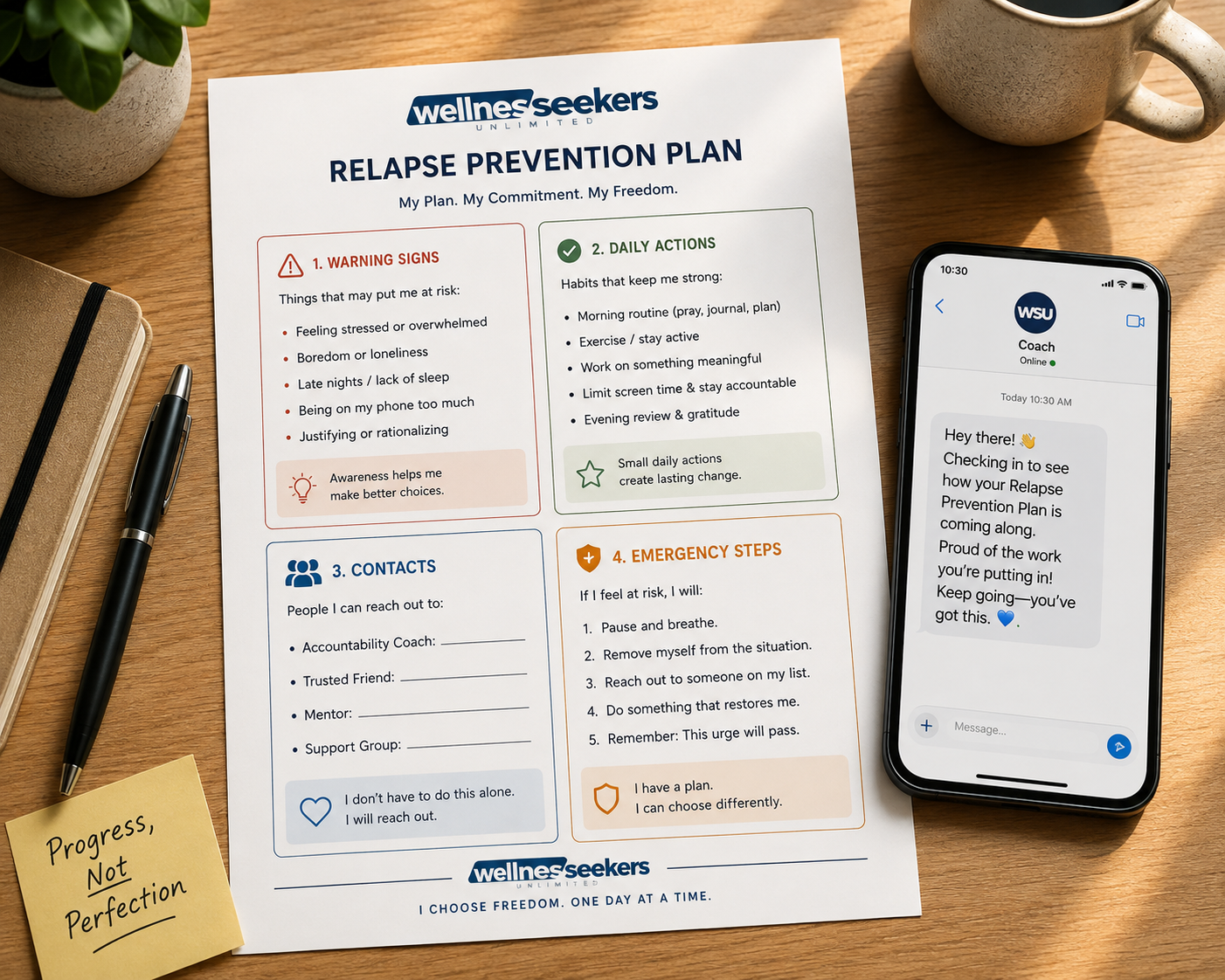
An effective relapse prevention plan is a written system for recognizing risk early, responding before an urge becomes a decision, and learning from every warning sign or setback. It should include your triggers, daily recovery practices, accountability contacts, environment boundaries, emergency actions, and a regular review process.
The goal is not to predict every difficult moment. It is to make sure you do not have to invent your response while you are tired, isolated, ashamed, or already bargaining with yourself.
A useful plan answers six questions in plain language:
Keep the plan short enough to use. A detailed document that you never open is less valuable than one page you review every morning.
A plan cannot protect a boundary that has never been defined. Write down the behaviors you are choosing to stop, the gray areas that usually lead toward them, and the healthy behaviors you want to practice instead.
Sexual sobriety is more than avoiding one website or behavior. It is a clear, honest agreement about how you will handle sexuality, devices, secrecy, relationships, and the situations that have supported the old pattern.
Relapse usually begins before the final behavior. Look for changes in your thinking, routines, and relationships.
Do not use this list to shame yourself. Warning signs are useful because they give you a chance to act earlier.
Your daily routine should support the condition you want to be in before temptation arrives. Choose a few actions you can sustain, such as a morning plan, an evening review, movement, adequate sleep, recovery education, and one honest check-in.
Tie each action to a time or event. “Check in regularly” is vague. “Text my accountability partner by 8:30 each morning with my risk level and plan” can be followed and evaluated.
Willpower becomes less reliable when access is private, immediate, and easy. Practical boundaries may include device-free rooms, charging a phone outside the bedroom, removing unneeded apps, using content filters, or placing reports with a trusted person.
Software can support a plan, but it cannot create honesty, address underlying issues, or make decisions for you. Use tools as one layer inside a broader recovery system.
Create a sequence you can follow without debate:
Include at least two backup contacts. A plan that depends on one person answering immediately is too fragile.
Your response should protect honesty and interrupt the shame cycle. Define whom you will contact, what access you will change, what facts you will record, and what professional support may be needed.
A slip is not permission to continue. It is also not proof that recovery is impossible. Respond quickly, tell the truth, and use the event to identify the part of the plan that failed or was ignored.
Online recovery coaching can help turn good intentions into a working system. A coach can help you identify patterns, make actions specific, review follow-through, and adjust the plan as work, travel, marriage, and stress change.
Coaching is not therapy. Therapy may be appropriate for trauma, mental health symptoms, clinical assessment, or other issues that require licensed care. Many men use coaching and therapy together.
Ask what raised your risk, what worked, what you avoided, and what needs to change. Update contacts, travel plans, device rules, and routines before circumstances make them obsolete.
A relapse prevention plan is not a promise that you will never struggle. It is a living recovery tool that helps you respond with honesty and structure.
If you want help turning your risks, routines, and accountability needs into a practical recovery system, schedule a Confidential Recovery Session with WSU.


© 2026 Sex & Porn Addiction Recovery Program - wellnessseekersultd.com. All Rights Reserved.