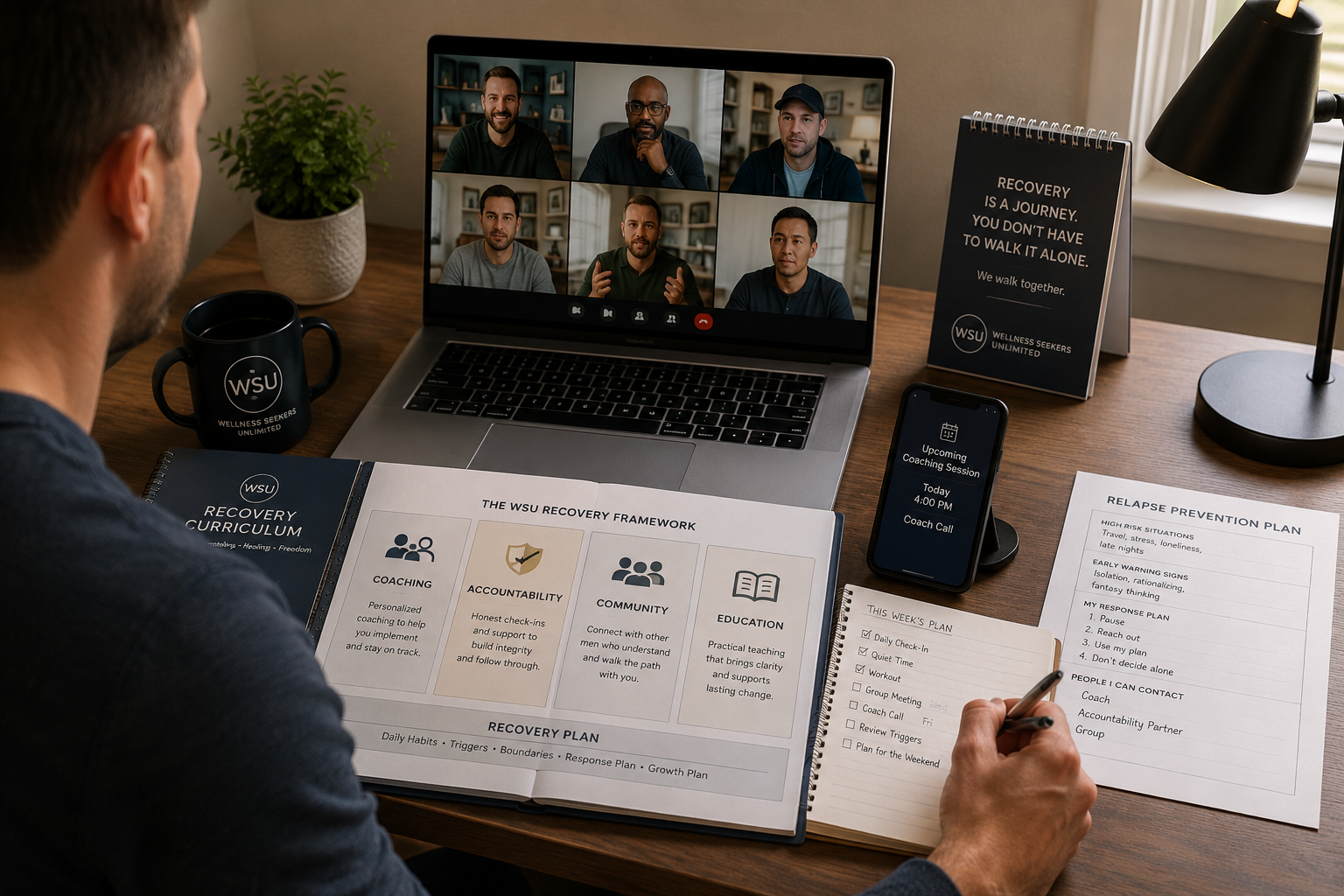
Compulsive sexual behavior recovery usually works best when it combines clear behavioral boundaries, honest accountability, education, supportive relationships, and help for the emotional or relational issues connected to the pattern. Coaching, therapy, groups, and practical tools can each play a role, but they do different jobs.
You do not have to identify with the phrase “porn addiction” to take the problem seriously. If sexual behavior feels difficult to control, continues despite consequences, or conflicts with your values and relationships, you have enough reason to seek support.
Compulsive sexual behavior is a repeated pattern of sexual thoughts or actions that feels hard to manage and causes meaningful problems in daily life. The pattern may involve pornography, masturbation, paid sexual activity, affairs, messaging, hookups, or several behaviors together.
The word compulsive describes the pattern, not your identity. It does not mean you are beyond help, and it does not remove your responsibility for choices or repair.
Recovery coaching focuses on implementation.
A coach may help you:
Coaching is not therapy. It does not diagnose or treat mental health conditions. Its purpose is to help you consistently apply the behaviors and practices that support recovery.
Therapy may be appropriate when you need:
A licensed therapist can diagnose and treat within their professional scope.
Many people think accountability means surveillance.
It doesn’t.
Healthy accountability means that someone else knows the truth. Regular check-ins create opportunities to recognize patterns, address setbacks early, and continue moving forward instead of returning to secrecy.
Isolation strengthens compulsive sexual behavior.
Groups provide something many people have been missing for years.
Connection.
Hearing other people describe experiences that sound exactly like your own can reduce shame and make it easier to ask for help.
Recovery is rarely built through motivation alone.
Understanding urges, triggers, emotional patterns, coping strategies, relationships, and relapse prevention helps you make better decisions long after the initial motivation fades.
Start with the problem in front of you, not the label you think you are supposed to use.
Some men benefit from all of these at the same time. Good support providers should be able to explain their role, their limits, and when another form of care is appropriate.
Not necessarily.
Many people assume they need to choose between coaching, therapy, accountability, education, or support groups.
In reality, those approaches often work together.
For example, someone might:
Recovery doesn’t always fail because someone chose the wrong type of help.
Sometimes it fails because they tried to recover with only one piece of the puzzle.
Early recovery often begins with a few concrete decisions:
Do not wait to understand every underlying issue before changing the behavior. At the same time, do not confuse abstinence with complete recovery. Lasting change usually involves learning why the behavior became useful and building healthier ways to respond.
The best online recovery coaching is not simply the program with the strongest promises. Look for clear structure, trained coaches, consistent accountability, education, peer support, realistic boundaries, and an honest distinction between coaching and therapy.
Ask how the program handles setbacks, privacy, urgent mental health concerns, spouse or partner impact, and long-term support. Avoid any provider that guarantees outcomes or suggests one method is right for everyone.
Recovery starts when you stop protecting the pattern and begin responding to it honestly. You can describe what is happening, accept appropriate support, and take the next right action without turning a behavior into your entire identity.
Some men want individual therapy.
Some want a coach.
Others want accountability or a support group.
The challenge is that these approaches are often separated into different programs.
Wellness Seekers Unlimited combines several recovery elements into one structured system, including:
The program was developed by a licensed clinician and Certified Sex Addiction Therapist (CSAT) whose approach was shaped by both professional training and more than 17 years of personal recovery experience.
If you’re looking for a structured recovery approach and want to explore whether WSU is the right fit, you can schedule a Confidential Recovery Session.


© 2026 Sex & Porn Addiction Recovery Program - wellnessseekersultd.com. All Rights Reserved.