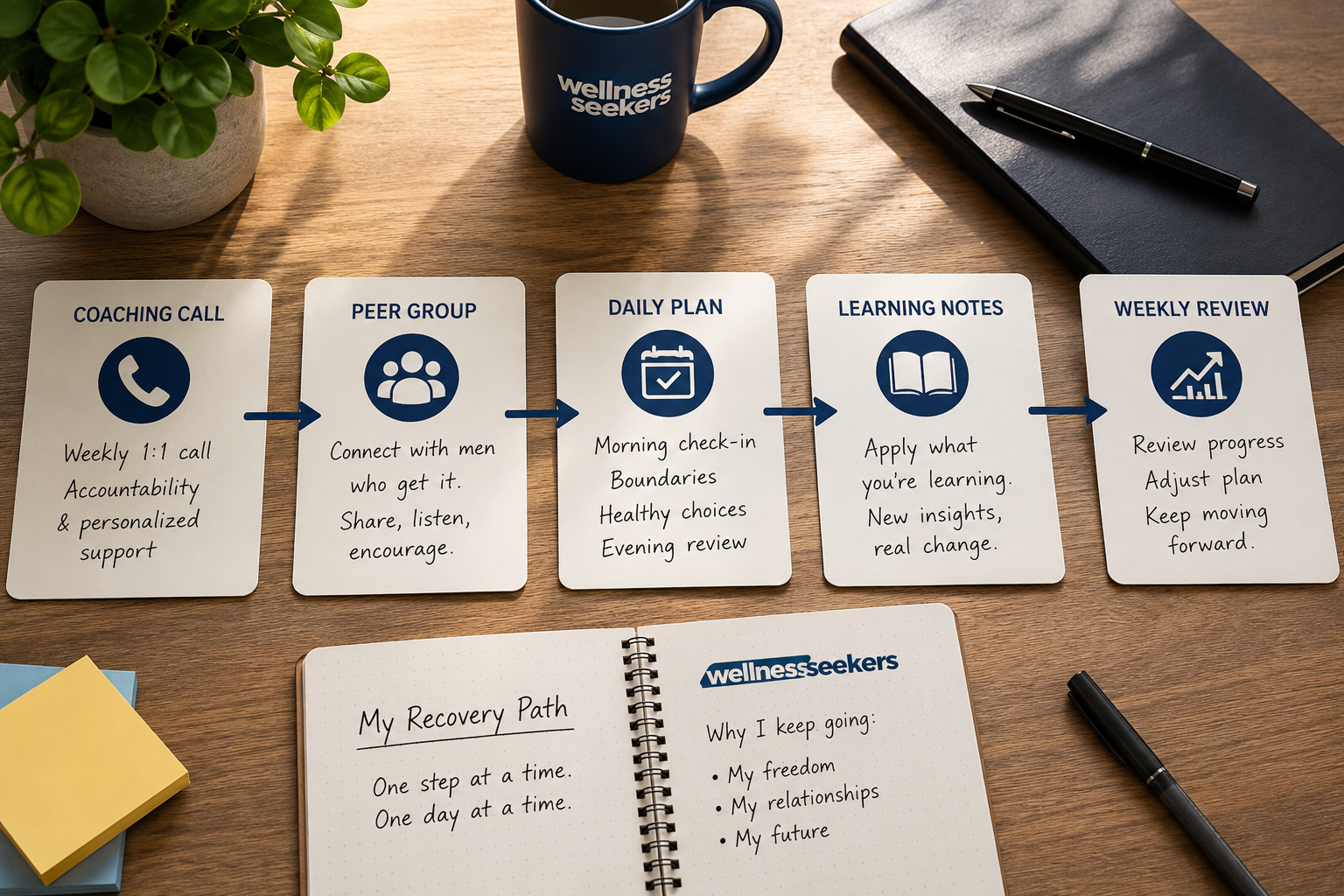
Online recovery coaching supports lasting sexual sobriety by helping a man turn recovery principles into consistent daily action. The strongest programs combine a clear plan, regular accountability, practical education, a working coaching relationship, peer support, and ongoing adjustment as life changes.
Coaching does not guarantee sobriety, and it is not therapy. Its value is in helping you practice recovery with enough structure and honest feedback that it can continue beyond the first burst of motivation.
Sexual sobriety begins with clear boundaries around the behaviors you are choosing to stop. Lasting recovery goes further. It includes learning to recognize risk, tell the truth earlier, handle emotions differently, repair harm, and build a life that does not depend on secrecy or escape.
The exact boundaries may differ by person and situation. They should be specific, responsible, and developed with appropriate support.
A program can organize the work into a sequence instead of leaving you to collect disconnected advice. Structure may include sobriety definitions, daily routines, trigger work, relapse prevention, relationship responsibility, and regular reviews.
Scheduled check-ins make it harder to disappear when shame rises. Useful accountability focuses on facts, risks, actions, and follow-through. It should help you take responsibility rather than transfer responsibility to a coach.
Education helps you understand urges, triggers, emotional patterns, secrecy, boundaries, and the difference between stopping a behavior and building deeper change. The point is application, not simply consuming more information.
A coach can notice patterns that are difficult to see alone, challenge rationalization, and help make a vague intention measurable. A healthy coaching relationship is honest about scope and refers to therapy or other qualified care when needed.
A well-led group can show you that struggle does not have to remain secret. Peers can offer perspective, encouragement, and examples of responsible action. Groups should have clear expectations and should never use humiliation as motivation.
Recovery conditions shift with travel, marriage, work pressure, illness, grief, or a new schedule. Long-term support includes reviewing what works and adjusting weak parts of the plan before they become predictable failure points.
Coaching can support planning, habits, accountability, education, and implementation. It cannot provide every form of care.
A trustworthy program will explain these limits clearly.
Do not choose solely by intensity, price, testimonials, or strong promises. Choose a system you understand and are willing to practice honestly.
Long-term change grows through repetition. You notice risk earlier, use the plan sooner, tell the truth faster, and recover from difficult moments without returning to the old escape.
Progress is not always a straight line. The meaningful question is whether you are becoming more honest, responsible, connected, and capable of responding differently.
Therapy may be appropriate for trauma, depression, anxiety, relationship injury, clinical assessment, or other mental health needs. Some men work with a coach and therapist at the same time, with each professional serving a distinct role.
If you are in immediate danger or experiencing a mental health crisis, use appropriate emergency or crisis services rather than relying on a coaching program.
Enrolling in a program can create an important starting point. Lasting sexual sobriety develops through what you repeatedly do with the support: honest check-ins, clear boundaries, daily recovery work, relationship responsibility, and changes to the plan when needed.
If you are comparing online recovery coaching programs, schedule a Confidential Recovery Session with WSU.


© 2026 Sex & Porn Addiction Recovery Program - wellnessseekersultd.com. All Rights Reserved.