You make it through the meeting, the commute, dinner, and everything else people need from you. Then you finally get a few minutes alone, pick up your phone, and move toward pornography almost before you have named what you are feeling.
Stress can narrow your attention toward whatever has brought fast relief before. If pornography has repeatedly provided distraction, stimulation, or emotional numbing, your brain may begin offering it as an automatic response to pressure.
Stress helps explain the sequence. It does not excuse secrecy, broken agreements, or harm. The useful question is not whether stress made you do it. The useful question is how stress changed your choices and where you can intervene next time.
A systematic review of 66 studies identified stress, coping styles, avoidance, craving, and emotional difficulties among factors associated with problematic pornography use. Much of this research is cross-sectional, so it cannot prove that stress causes the behavior for every person.
Another study conducted during the COVID-19 pandemic found that problematic online pornography use, psychological stress, emotion dysregulation, and insomnia symptoms were related in one adult sample. The unusual pandemic context matters, but the findings support looking at stress and sleep as parts of the same practical pattern.
The most visible stressor is not always the most important one. Track what happens across the day:
For many men, the urge is a late warning sign. The recovery opportunity may have appeared hours earlier when they skipped lunch, stopped communicating, or carried work pressure into an isolated evening.
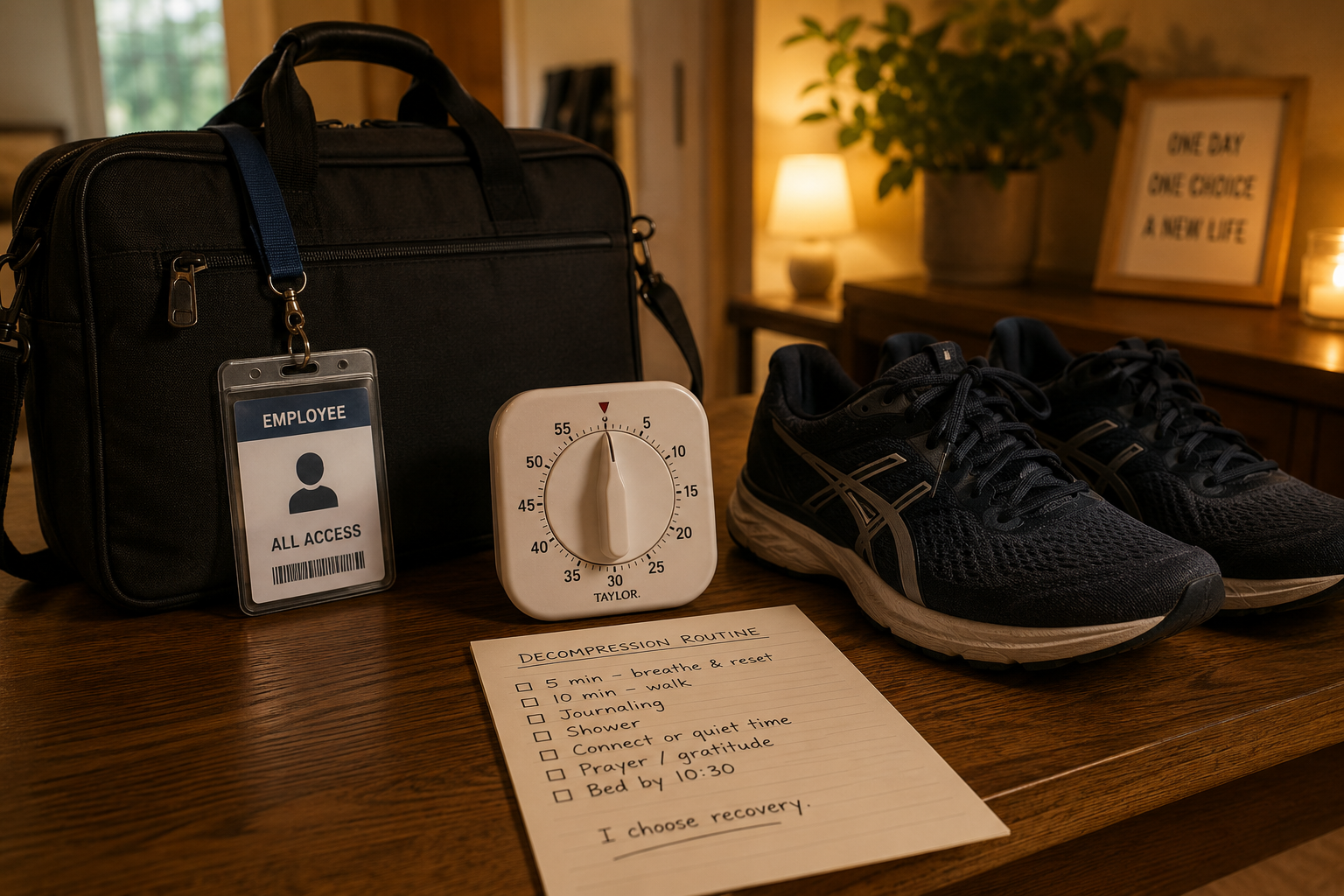
Do not wait until the urge is at full intensity. Build a short transition between the stressful role and the vulnerable setting.
That might mean a ten-minute walk before entering the house, a phone call after a difficult shift, changing clothes and eating before opening a laptop, or writing down unfinished work so your mind does not keep carrying it.
The routine should lower activation and increase connection. Passive scrolling often looks like rest while keeping you alone with the same device and the same cues.
If this sequence repeats, add it to your written relapse prevention plan. The plan should name the early warning signs, not only the final behavior.
You may stay task-focused while the pressure is active and feel the emotional cost only when the environment becomes quiet. Delayed decompression is common, which is why transition routines matter.
It may reduce one major trigger, but recovery may still require accountability, device boundaries, honesty, relationship repair, and work on other emotional patterns.
You may not be able to remove pressure from your life. You can stop treating pressure as something you must carry alone until pornography becomes the fastest exit.
If stress keeps exposing gaps in your recovery plan, schedule a Confidential Recovery Session with WSU to build a structure that works during demanding weeks, not only easy ones.


© 2026 Sex & Porn Addiction Recovery Program - wellnessseekersultd.com. All Rights Reserved.