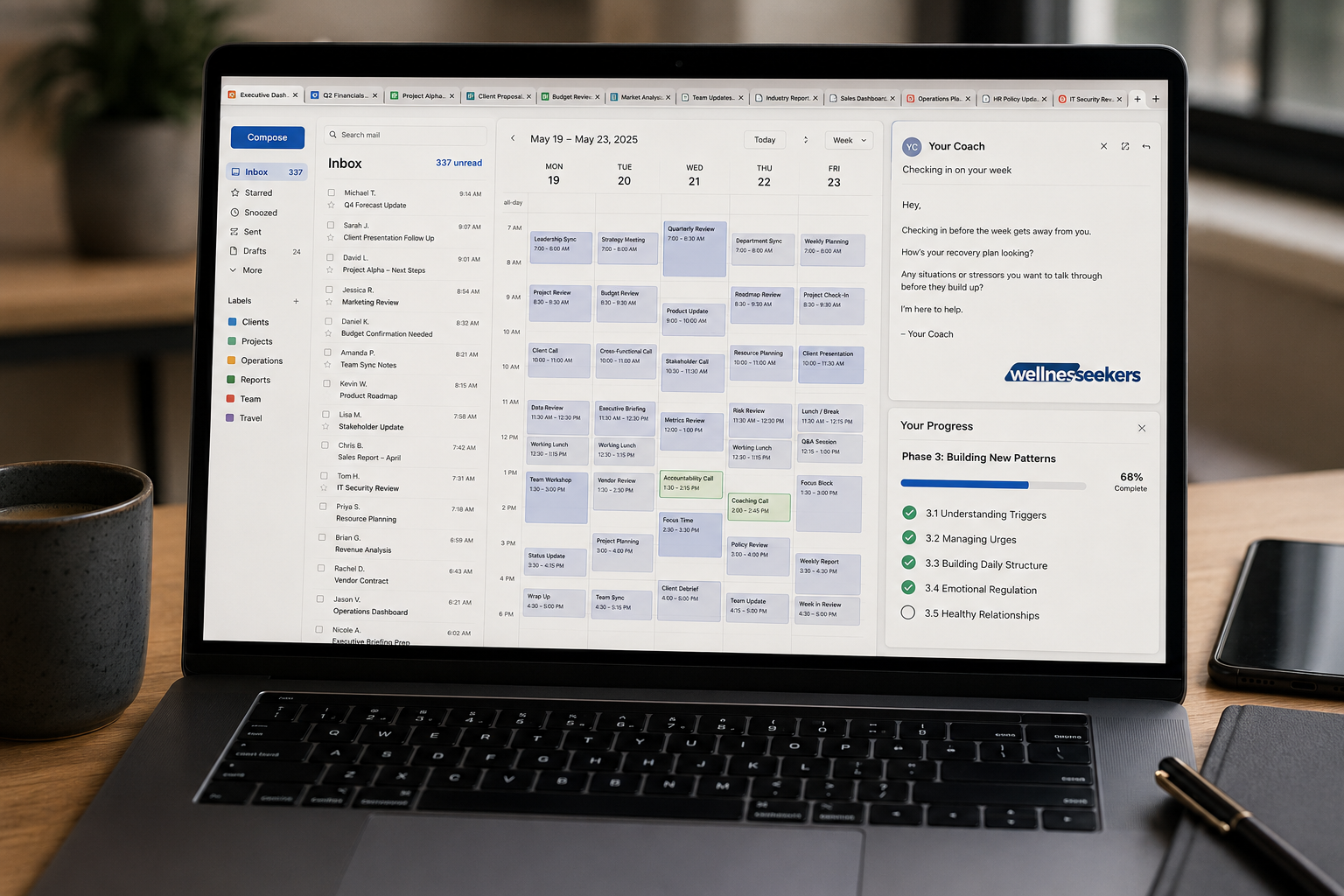
Professionals often benefit from structured sexual sobriety coaching because demanding schedules, travel, stress, privacy, and changing environments can weaken informal recovery efforts. A strong program turns recovery into a repeatable system with clear boundaries, scheduled accountability, practical education, and plans that travel with you.
Structure is not about treating you like a child. It is about reducing the number of important recovery decisions you must make when you are exhausted, isolated, under pressure, or away from your normal routine.
Career success does not cause compulsive sexual behavior. Certain working conditions can make an existing pattern easier to hide and repeat.
A recovery approach must fit real working conditions. If it only functions during a quiet week at home, it is not yet reliable.
You need specific behavioral boundaries, including the gray areas that usually lead toward secrecy or acting out. Vague goals create room for bargaining.
Check-ins should happen at known times and include useful information: current risk, completed actions, missed commitments, and the next plan. Accountability is most effective before a crisis.
Recovery practices should work in an office, hotel, airport, station, clinic, or home. A portable routine may include a short morning plan, an evening review, recovery education, movement, and contact with a support person.
Travel, night shifts, conferences, major deadlines, conflict, and fatigue are not surprises. A structured program helps you decide device rules, contacts, sleep priorities, and emergency steps before those periods begin.
A useful system measures follow-through and changes when circumstances change. It does not simply repeat the same advice after every setback.
Coaching generally focuses on goals, habits, accountability, education, and implementation. Therapy addresses clinical assessment and treatment, trauma, mental health conditions, and other needs within a licensed professional’s scope.
A professional may benefit from both. The right question is not which field wins. It is which kinds of support match the problems you are actually facing.
Look past prestige and promises. Ask practical questions:
Avoid programs that guarantee sobriety, claim to replace all other care, or depend mostly on motivation. A recovery framework should be clear enough to evaluate and flexible enough to fit your actual responsibilities.
Professionals may have legitimate concerns about reputation, licensing, employment, or leadership responsibilities. Thoughtful privacy is reasonable. Total secrecy is not a recovery system.
You do not need to disclose personal information to everyone at work. You do need carefully selected people who receive accurate information and can challenge avoidance. For legal, licensing, medical, or employment questions, seek advice from an appropriately qualified professional.
Structure is working when it produces greater honesty, earlier responses to risk, better follow-through, and healthier ways of handling pressure. A full calendar of recovery activities is not the goal by itself.
Over time, the system should help you address what the behavior has been doing for you. Recovery is more than controlling access. It is learning to respond differently to stress, loneliness, shame, rejection, and exhaustion.
A good program helps you practice the same principles long enough for them to become part of daily life. That is the bridge between a short-term intervention and long-term sexual sobriety.
If you are comparing structured coaching options, schedule a Confidential Recovery Session with WSU.


© 2026 Sex & Porn Addiction Recovery Program - wellnessseekersultd.com. All Rights Reserved.